
Developing the H&R Bot persona
Project.
I led the development of the strategy and standards for the H&R Block Canada chatbot.
Outcomes.
Increased containment by 38%
Improved topic coverage
Reduced call centre costs
Improved NPS YoY
Skills.
Strategy
Facilitation
Branding
Influence and alignment
Team.
Senior Content Designer (me!)
Product Lead
Operations Lead
Design Director
Marketing Lead
H&R Block Canada launched a chatbot in their DIY tax software, with just 2 conversation topics. It wasn’t really helping. I joined as a content strategist and developed a new chatbot strategy — determining the topic coverage, hand-offs to humans, chatbot persona, and standards for designing conversations.
Discovery.
I audited the chat experience. Fortunately, they had a ton of user sentiment and conversation query data to help me understand the topics users expected the chatbot to support.
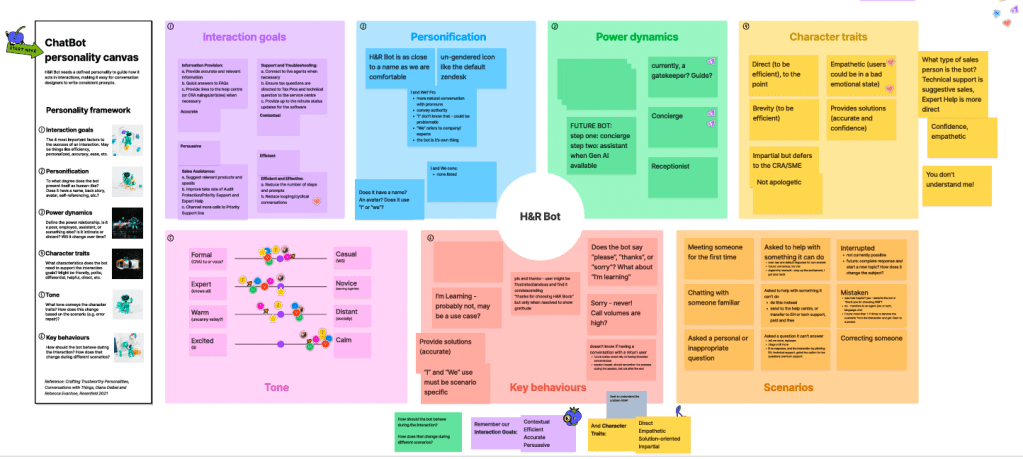
I ran my favourite workshop using a framework adapted from Conversations with Things by Diana Deibel and Rebecca Evanhoe. Out of the workshops, I determined the H&R Bot is a concierge:
- providing the right info quickly
- suggesting helpful add-ons
- referring to subject matter experts when needed
Deliver.
I created and socialized the H&R Bot writing guide, outlining the principles for a successful conversation and adapting the brand guidelines to the chatbot context. The guide has standards for tone, grammar, mechanics, and vocabulary, and tips to design effective conversations.
Outcomes.
- Improved the chatbot’s topic coverage from 2 to over 40
- Increased containment rate by 38%
- Reduced calls to the contact centre, saving the agents time and reducing costs
- Improved NPS over the previous tax season

Want these same outcomes for your chatbot?
Steal this workshop to develop your team’s chatbot persona in 5 steps:
- Set interaction goals. What does a successful interaction look like? How does it support business goals?
- Decide the level of personification. Is it trying to be human-like? Does it have a name? Is it self-referential? Is it an advisor or a servant?
- Define characteristics and key behaviours. What does it do, and how does it act while doing it?
- Set the tone. What does it feel like to interact with the bot?
- Consider different scenarios. How does it respond when the topic intent is a low confidence match? When it gives wrong information? Does it apologize?
 KL Portfolio